

Antique Furniture Restoration in Monmouth County
Preserving the character and craftsmanship of your heirloom pieces. Expert upholstery restoration, frame repair, and period-appropriate fabric selection from a local shop that respects the story your furniture tells.
Your Furniture Has a Story Worth Keeping
There is something different about an antique chair compared to anything you can buy new today. The wood has a warmth to it. The joinery tells you that somebody spent hours fitting those pieces together by hand. The proportions feel right in a way that modern mass-produced furniture never quite captures. When a piece like that ends up in your home, whether it was passed down through your family or found at an estate sale in Red Bank, it carries weight that goes beyond just being functional.
Get a Free Estimate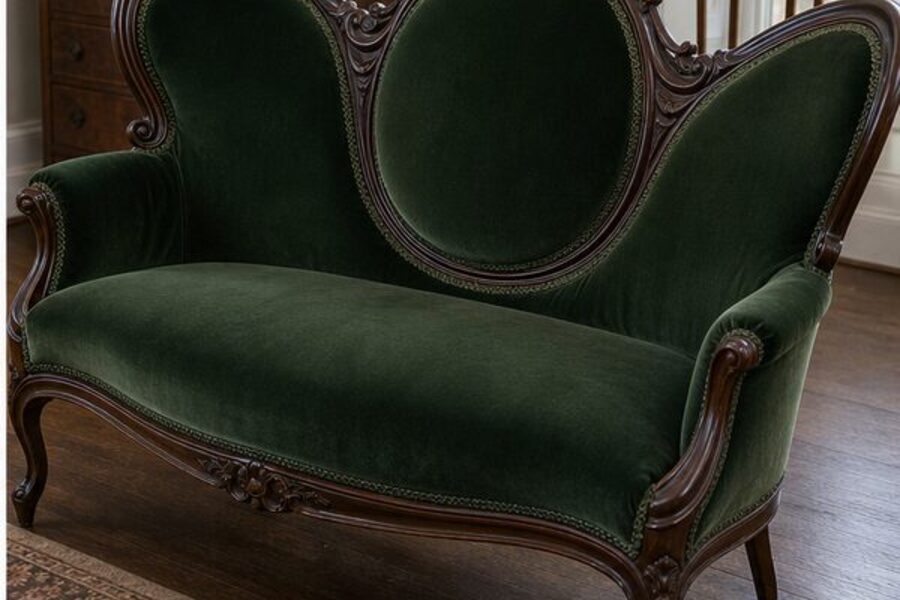
Why These Pieces Are Worth Saving
We get it. People bring us pieces all the time with a look on their face that says, "Please tell me this can be saved." A grandmother's settee from the 1940s with springs poking through the seat. A Victorian parlor chair that survived 130 years of use but finally gave up on the upholstery. A writing desk from an old Monmouth County farmhouse that needs its joints re-glued and its leather top replaced. These pieces are not just furniture. They are connections to the people who came before us, and losing them feels like losing a piece of that history.
An Investment Worth Protecting
Beyond the sentimental value, antique furniture is often a solid investment. Well-maintained period pieces hold their value better than almost anything you can buy at a furniture store today. A properly restored Victorian settee or an Art Deco vanity table can be worth significantly more after restoration than the cost of the work itself. The key is doing the restoration right, using the correct techniques and appropriate materials that honor the original craftsmanship rather than covering it up with shortcuts.
Real Restoration, Not a Quick Cover-Up
At Coastal Craft Upholstery, antique restoration is one of the most rewarding parts of what we do. We work with collectors, antique dealers, interior designers, and families across Monmouth County and the Jersey Shore who want their pieces done properly. Not a quick re-cover job that ignores the structural issues underneath. Not a modernization that strips away the character. Real restoration that respects the period, the original builder, and the reason you care about this piece enough to bring it to us.
Our approach starts with understanding what you have and what it needs. Sometimes that means a full teardown and rebuild. Other times, the frame is solid and we just need to replace the upholstery with period-appropriate fabric and fresh padding. We will walk you through every option, show you fabric samples, and make sure you know exactly what we are going to do before we start. No surprises, no pressure, and absolutely no cutting corners on a piece that deserves better than that.
Furniture Styles We Restore
From early American colonial pieces to sleek mid-century designs, we understand the construction methods and aesthetic details that define each era.
Victorian (1837-1901)
Ornate carvings, tufted backs, cabriole legs, rich velvets, and deep jewel tones. We preserve the decorative flourishes that define this era.
Edwardian (1901-1910)
Lighter and more refined than Victorian. Satinwood inlays, painted details, and delicate proportions that call for a careful touch.
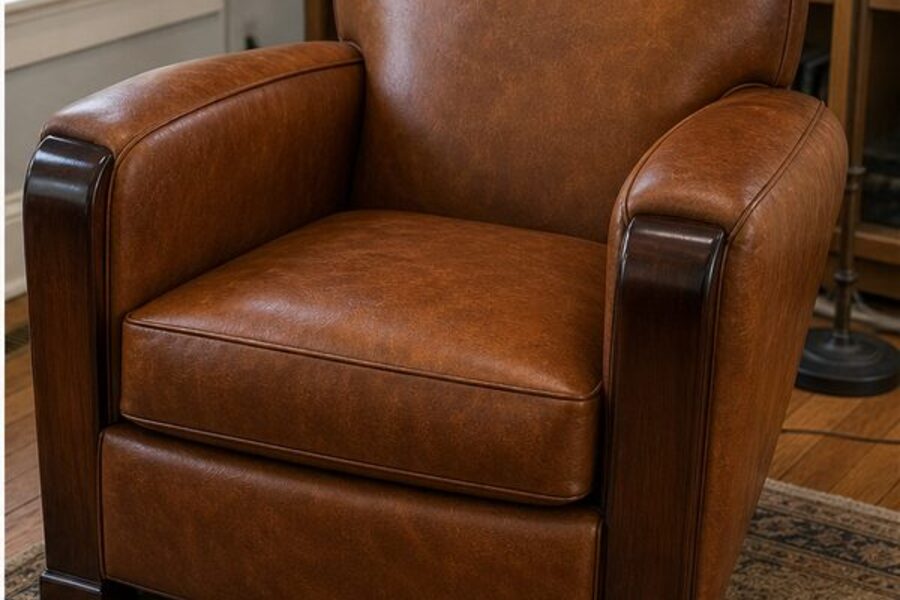
Art Deco (1920s-1930s)
Bold geometric patterns, exotic veneers, lacquered finishes, and luxurious fabrics. We source reproduction materials that match the era's glamour.
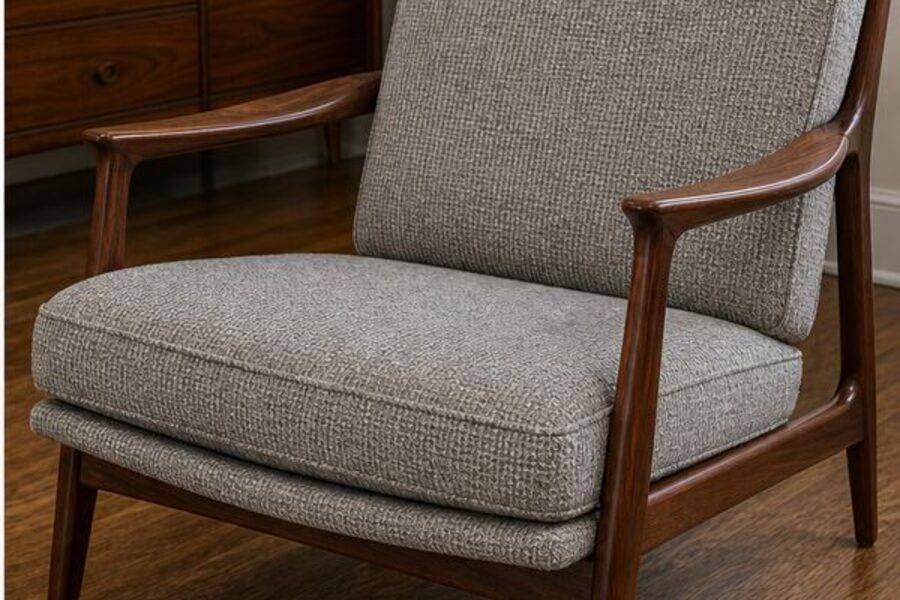
Mid-Century Modern (1940s-1960s)
Clean lines, organic curves, tapered legs, and minimal ornamentation. We match the period-correct textiles and preserve the iconic silhouettes.
Colonial (1620-1780)
Sturdy construction, turned legs, simple lines, and practical design. We respect the handmade character of these early American pieces.
Federal (1780-1820)
Elegant neoclassical design with shield-back chairs, eagle motifs, and delicate inlays. We handle the refined details that make Federal pieces distinctive.
Each furniture period has its own construction techniques, joinery methods, and aesthetic philosophy. A Victorian chair is built completely differently from a mid-century piece, and restoring one like the other would be doing it a disservice. We study the piece, identify the period and construction methods, and match our approach to what the original craftsman would have done. That is what separates real restoration from a simple re-cover job.
Types of Antique Furniture We Restore
If it is old, well-built, and means something to you, we can bring it back. Here are the most common pieces that come through our workshop.
Settees
Two-seat formal pieces from parlor sets
Parlor Chairs
Side chairs, arm chairs, and accent seating
Chaise Lounges
Fainting couches and reclining lounges
Writing Desks
Secretary desks, roll-tops, and leather-top desks
Dining Sets
Tables, chairs, and buffet seating
Vanity Tables
Dressing tables with mirrors and stools
Dressers
Highboys, lowboys, and chests of drawers
Sofas & Couches
Camelback, Chesterfield, and rolled-arm styles
Bringing the Fabric Back to Its Original Glory
The upholstery on an antique piece is more than just a covering. It is part of the design language. The way a Victorian tufted back catches light, the way a mohair velvet ages into a specific patina, the way hand-tied springs feel different from modern sinuous springs under your weight. All of these details matter, and they are exactly what we pay attention to when we restore antique upholstery.
Get a Free Restoration EstimatePeriod-Appropriate Fabric Selection
Finding the right fabric for an antique restoration is one of the most important decisions in the entire process. A mid-century Danish chair should not be covered in a heavy Victorian brocade, and a Queen Anne wingback should not end up in a 1970s plaid. We carry reproduction fabrics from mills that specialize in historical textiles. Damasks, brocades, horsehair cloth, tapestry weaves, silk velvets, and mohairs that match the look and feel of what the original craftsman would have used. We also work with customers who want to blend old and new, pairing a period frame with a modern performance fabric that handles daily life better while still looking appropriate to the era.
Matching Original Techniques
Antique upholstery was done by hand. No staple guns, no foam rubber, no polyester batting. The original upholsterers used tacks, burlap, cotton batting, horsehair stuffing, and hand-stitched edge rolls to shape the padding. We follow these same methods when a customer wants a historically accurate restoration. For pieces heading into a museum or a collector's showroom, that attention to technique matters as much as the fabric itself.
Hand-Tied Springs
If your antique piece has coil springs, they were almost certainly hand-tied with an eight-way tying pattern. This method uses jute twine to connect each spring to its neighbors in eight directions, creating a support system that flexes evenly and lasts for decades. We re-tie springs using the same eight-way hand-tied technique. It takes longer than modern alternatives, but it is the right way to do it on a piece that was built to be done this way. When a spring is broken or missing, we source matching replacements that fit the original spacing.
Structural Work That Stands the Test of Time
Beautiful upholstery on a weak frame is just a cover-up waiting to fail. Before we touch the fabric, we inspect every joint, every dowel, every bracket, and every inch of wood on the frame. If the structure is not solid, the rest of the restoration will not hold up. Here is what we look for and how we address it.
Discuss Your Frame Repair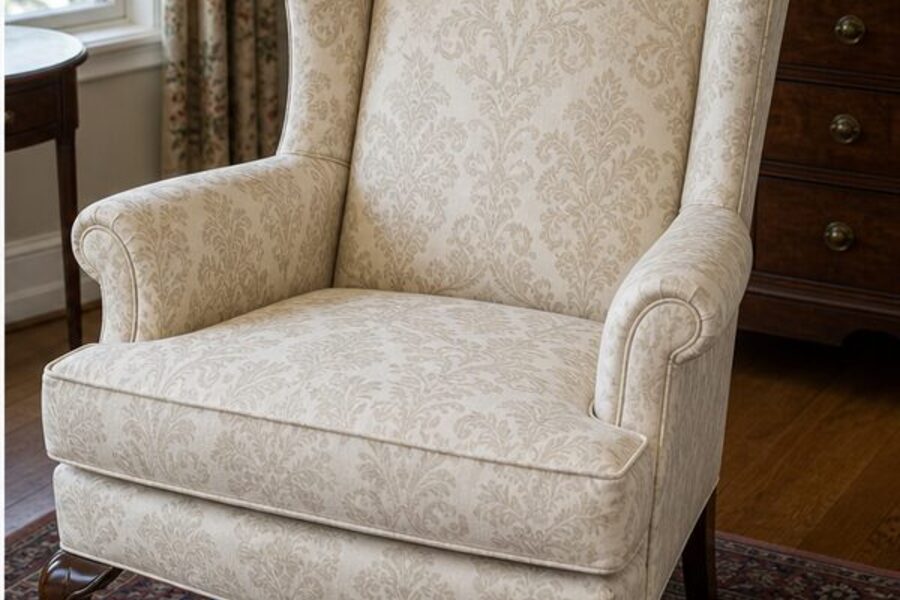
Joint Repair
Antique furniture joints loosen over time. Mortise and tenon joints dry out and shrink. Dowel joints crack. Glue from a hundred years ago was hide glue, and while it was good for its era, it does break down eventually. We disassemble loose joints, clean out the old glue, and re-assemble with fresh adhesive that is appropriate for the piece. For joints that have worn and become sloppy, we shim them for a tight fit or replace the dowels entirely. On chairs that get rocked and leaned back in, solid joints are absolutely critical to safety.
Veneer Repair
A lot of antique furniture from the 18th and 19th centuries used veneers over solid wood substrates. Mahogany veneer over pine. Walnut burl over poplar. These veneers were hand-sawn and much thicker than modern machine-cut veneers, which gives them a depth and warmth that is hard to replicate. When veneer lifts, chips, or cracks, we repair it by re-gluing loose sections, patching missing areas with period-appropriate veneer stock, and blending the repair so it disappears into the surrounding surface.
Wood Restoration
Scratches, water rings, sun bleaching, and general wear are all common on antique wood surfaces. We address these issues with techniques that match the original finish. For oil-finished pieces, we use linseed oil and hand-rubbed wax. For lacquered pieces, we touch up and blend. We never strip an original finish unless it is too far gone to repair, because the patina and color of aged wood is part of the value. When stripping is necessary, we use methods that are gentle on the wood and follow up with a finish that respects the period.
French Polish
French polishing is one of the most beautiful and demanding wood finishing techniques ever developed. It involves applying thin layers of shellac dissolved in alcohol, using a pad called a muneca or rubber, in a specific pattern of strokes that builds up a glass-like surface with extraordinary depth and clarity. This technique was standard on fine furniture from roughly the 1800s through the early 1900s. If your piece originally had a French polish, we can restore it or apply a new one. It is slow, painstaking work that requires a skilled hand, but the result is unlike anything you can achieve with modern spray finishes.
The Restoration Process
Every antique piece follows a careful six-step process designed to preserve its history while bringing it back to full strength and beauty.
Assessment
We examine the piece thoroughly, identifying the period, construction methods, existing damage, and original materials. We discuss your goals and provide an honest recommendation.
Documentation
We photograph every angle, note existing construction details, label original hardware, and record fabric types. This reference guides the entire restoration and protects your investment.
Careful Teardown
We remove the old upholstery by hand, saving original tacks, gimp, and any usable materials. Fabric is stripped in reverse order of how it was originally applied, preserving the construction pattern.
Structural Repair
Loose joints are re-glued, broken components are repaired or replicated, springs are re-tied, and the frame is brought back to its original strength before any new upholstery goes on.
Reupholstery
New padding, webbing, and fabric are applied using period-appropriate techniques. Hand-tacking for antiques, proper layering of materials, and pattern matching on the fabric for a flawless result.
Final Inspection
Every seam, every joint, every tack is checked. We verify symmetry, comfort, structural integrity, and finish quality before your piece leaves our shop. We only release work we are proud of.
Preservation vs. Modernization
One of the first conversations we have with every antique restoration customer is this: do you want to keep it historically accurate, or do you want to update it for modern living? There is no wrong answer. It depends on the piece, how you plan to use it, and what matters most to you.
Get Our RecommendationPeriod-Authentic Restoration
If you are a collector, if the piece has significant monetary value, or if you simply want it to look exactly the way it would have in its original era, we do full period-authentic restoration. That means hand-tied springs, cotton and horsehair padding, traditional tacking methods, and reproduction fabrics that match the original era. We source materials from specialty suppliers who cater to museum-quality restoration work. The result looks, feels, and sits the same way it did when it left the original workshop decades or centuries ago.
Modern Comfort, Classic Look
Most of our antique restoration customers fall into this camp. They love the look and feel of their antique piece, but they actually want to sit in it every day. For these projects, we keep the exterior authentic looking with period-appropriate fabric and trim while updating the interior padding with modern foam and Dacron for better comfort and longevity. The springs get re-tied properly, but we might add a layer of high-density foam over the original cotton batting to give it more support. From the outside, it looks like a proper antique. From a comfort standpoint, it sits like a modern chair.
Full Redesign on an Antique Frame
Sometimes a customer falls in love with the bones of an antique piece but wants to take it in a completely new direction. A Victorian armchair covered in a bold contemporary print. A Federal period settee in a clean white linen. An Art Deco club chair in distressed cognac leather. We love these projects because they give old furniture a new life while honoring the craftsmanship of the frame. The key is choosing the right fabric and approach so the piece looks intentional rather than mismatched.
Still Not Sure?
Not sure which direction is right for your piece? Bring it in or send us some photos. We will tell you what we think will work best and show you examples of similar pieces we have restored in each style.
Finding the Right Fabric for Your Antique
Fabric selection can make or break an antique restoration. The wrong fabric on a period piece is immediately obvious to anyone who knows what they are looking at, and even people who do not know furniture can sense when something feels off. We take fabric selection seriously because the rest of the restoration is wasted if the covering does not suit the piece.
See Fabric Samples In Person
Period-Appropriate Options
For historically accurate restorations, we source fabrics from mills that specialize in reproduction textiles. Victorian pieces call for rich velvets, damasks, and brocades in deep reds, greens, and golds. Edwardian furniture looks best in lighter florals, chintzes, and satins. Art Deco pieces shine with geometric patterns and luxurious textures like sharkskin and bouclette. Colonial and Federal period chairs were often done in simple woven fabrics, needlepoint, or leather. We carry samples from all of these categories and can order from dozens of specialty suppliers.
Reproduction Fabrics
Reproduction fabrics are modern textiles woven or printed to match historical patterns and textures. The advantage of reproductions is that they are made on modern looms, which means they are more consistent, more durable, and easier to source than trying to find original antique textiles. A good reproduction damask is virtually indistinguishable from the original to anyone but a textile expert. We work with several mills that produce excellent reproductions for restoration work.
Blending Old and New
Performance fabrics have come a long way. Brands like Crypton and Sunbrella now make upholstery-weight fabrics in patterns and textures that work beautifully on antique pieces. If you have a family heirloom that needs to survive kids, pets, and daily use, a performance fabric in a neutral tone or a subtle pattern can give you the durability of modern materials without making the piece look out of place. We have done this successfully on dozens of antique restorations for families across Monmouth County who want their pieces to be used, not just admired from across the room.
Leather for Antiques
Leather was widely used on antique furniture, especially on writing desks, library chairs, Chesterfield sofas, and club chairs. When restoring leather pieces, we source full-grain hides in colors and finishes that match the period. Distressed and pull-up leathers work particularly well on antiques because they develop a patina that ages alongside the wood. For desk tops, we use gold-tooled leather panels that replicate the original look.
Before & After Showcase
Every piece that leaves our shop tells a story of careful restoration. Here are some of our recent antique projects from customers across Monmouth County.
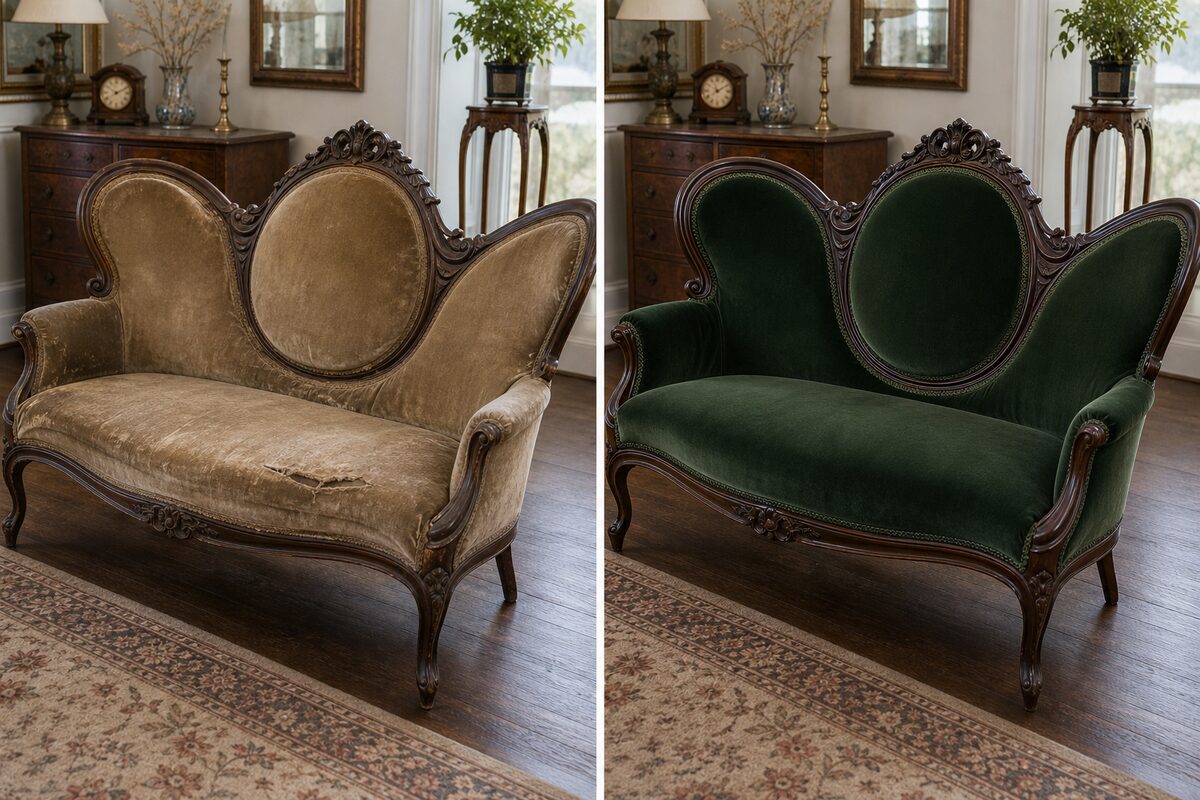
Victorian Settee
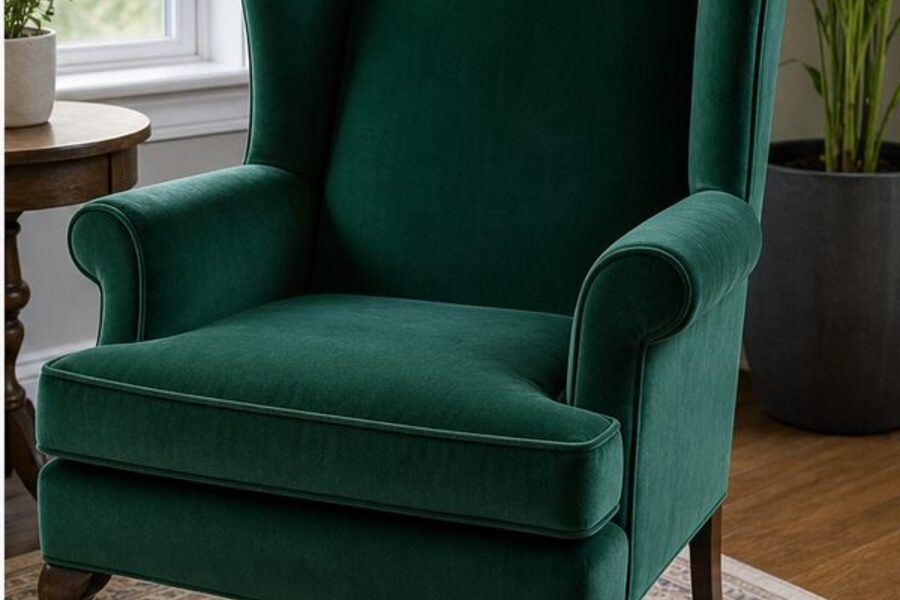
Full teardown, spring re-tie, silk velvet in forest green
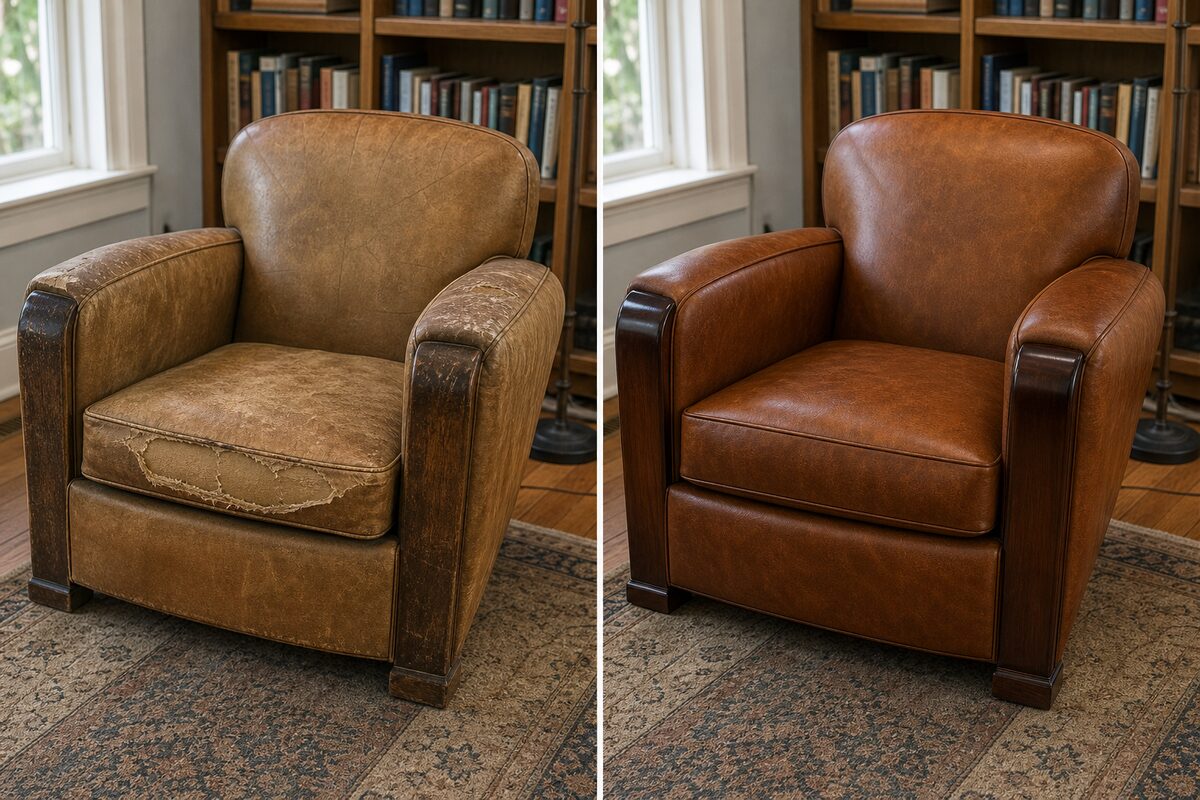
Art Deco Club Chair
Frame repair, new foam, distressed cognac leather

Colonial Wingback
Joint repair, hand-tied springs, reproduction damask
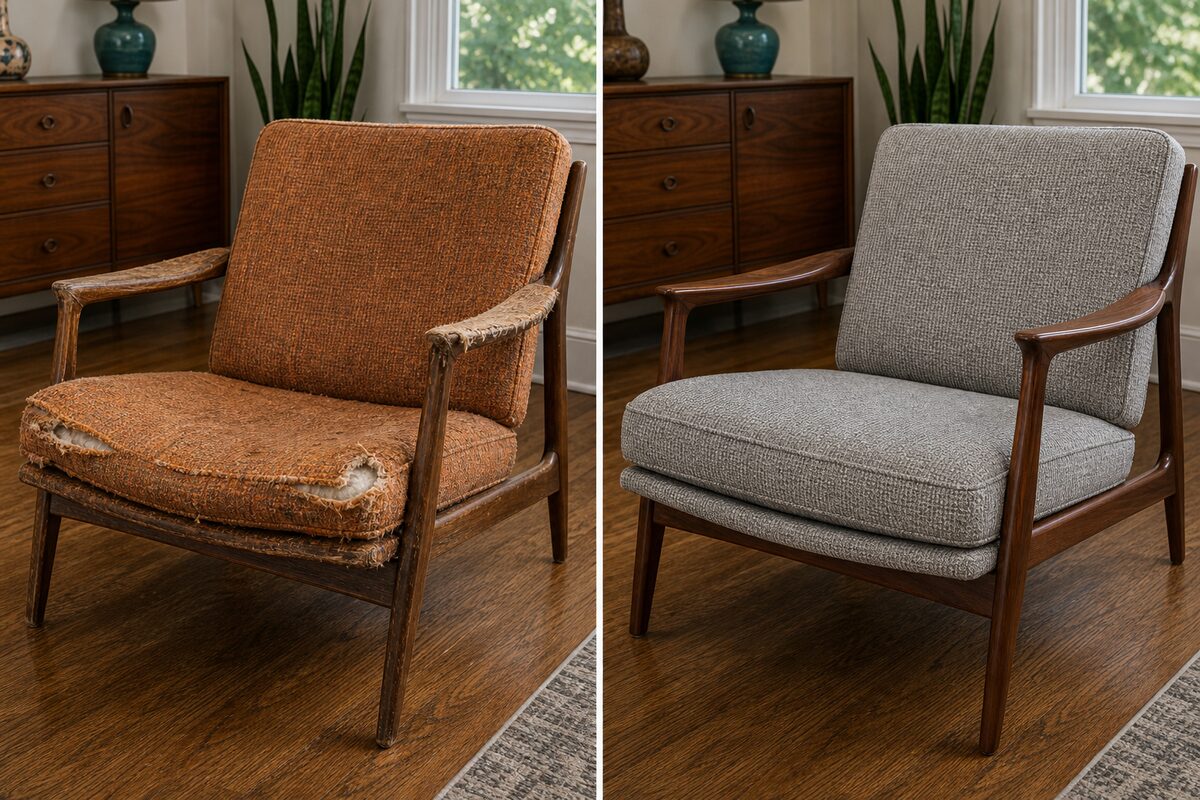
Mid-Century Lounge
Webbing replacement, period-correct wool tweed
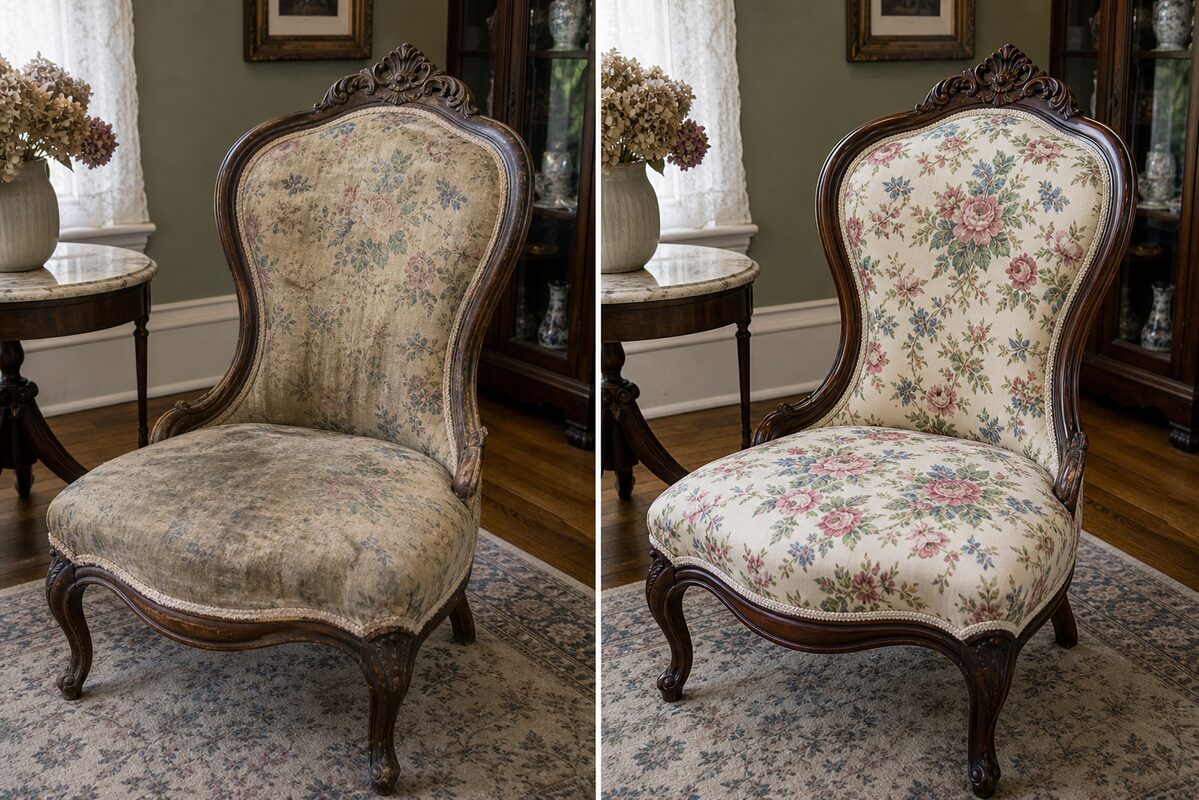
Edwardian Parlor Chair
Delicate frame repair, cotton batting, floral chintz
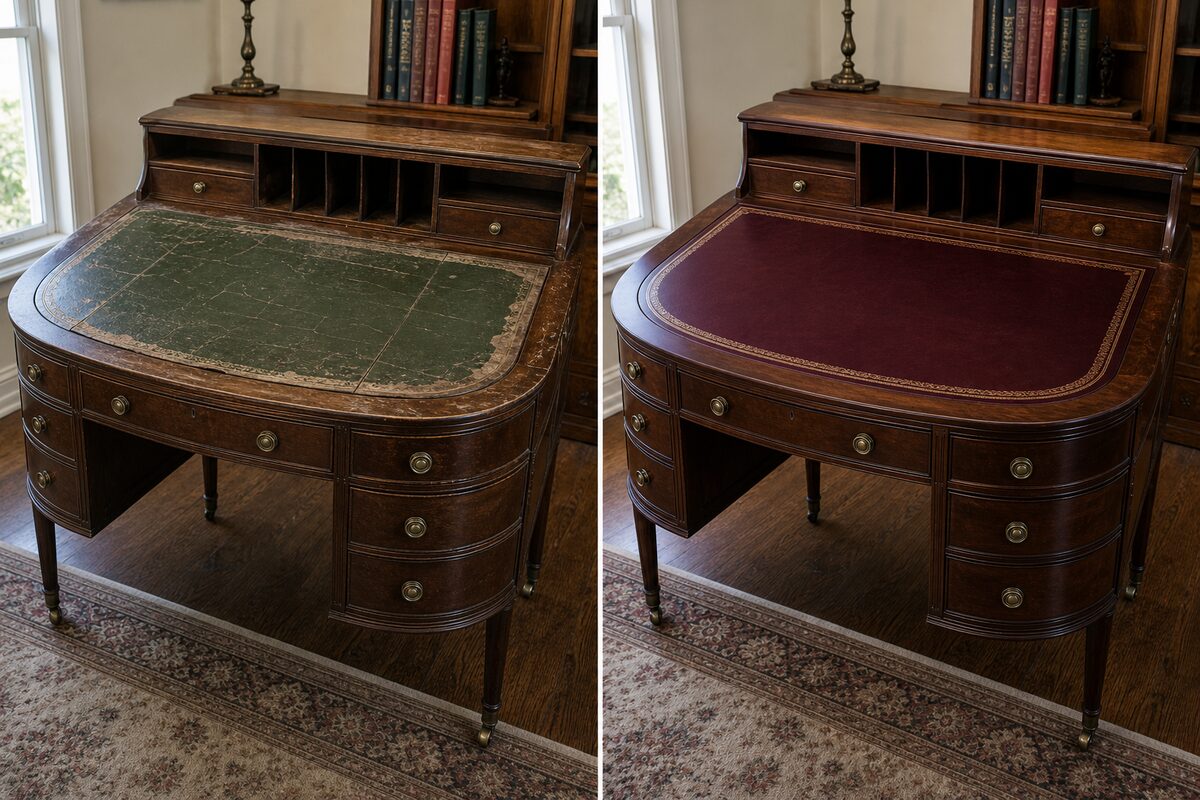
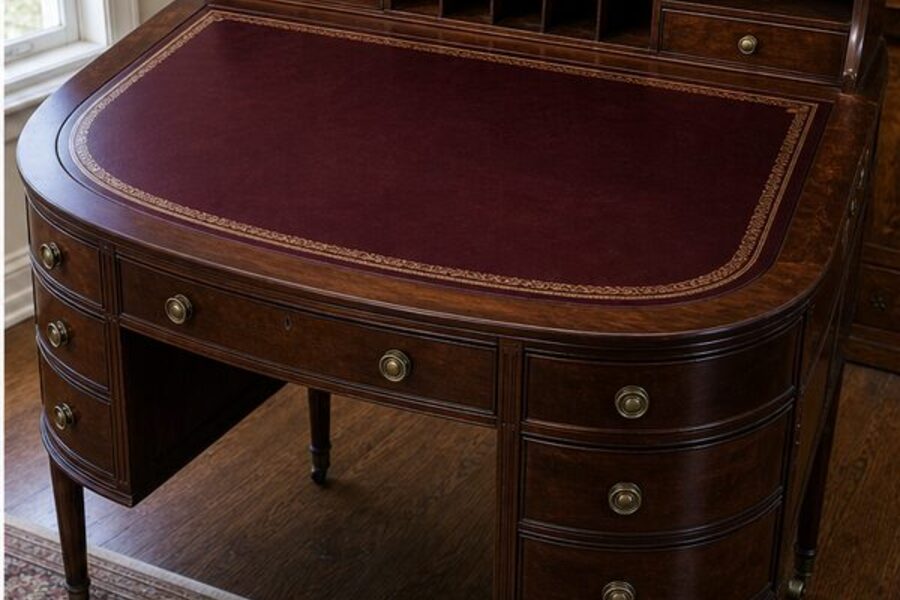
Federal Writing Desk
Veneer repair, French polish, gold-tooled leather top
Caring for Your Restored Antiques
A good restoration can last another 50 to 100 years with the right care. Here is what we tell every customer when they pick up their restored piece.
Ask Us About Care TipsKeep It Out of Direct Sunlight
UV light is the number one enemy of both antique wood finishes and upholstery fabrics. If your restored piece is near a window, use curtains or UV-filtering window film to reduce exposure. Even reproduction fabrics will fade over time in direct sun, and wood finishes can bleach or darken unevenly.
Control Humidity
Wood expands and contracts with humidity changes. In New Jersey, we go from humid summers to dry, heated winters, and that cycle can stress antique joints over time. Try to keep your home between 40 and 55 percent relative humidity year-round. A humidifier in winter and good ventilation in summer go a long way. This is especially important for veneered pieces, which are more sensitive to humidity swings than solid wood.
Dust and Vacuum Regularly
Dust your wood surfaces with a soft, dry cloth weekly. For upholstered pieces, vacuum the fabric gently using an upholstery attachment on a low setting. This prevents dust and grit from working into the fibers, which causes premature wear. For velvet and silk fabrics, use a soft brush instead of a vacuum to avoid crushing the pile.
Blot Spills Immediately
If something gets spilled on your restored upholstery, blot it immediately with a clean, dry cloth. Do not rub. Rubbing pushes the liquid deeper into the fabric and can damage the fibers. For stubborn stains, call us before trying any cleaning products. Some cleaners that are fine for modern fabrics can damage reproduction textiles and antique finishes.
Wax and Condition Periodically
For wood surfaces, apply a good quality paste wax once or twice a year. Avoid spray polishes that contain silicone, as they can build up over time and make future refinishing difficult. For leather pieces, condition the leather every 6 to 12 months with a leather-specific conditioner. We can recommend specific products based on your piece.
Use Your Furniture
This might sound counterintuitive, but the best thing you can do for an antique piece is use it. Furniture that sits unused in a corner actually deteriorates faster than furniture that gets regular use, because the flexing of springs and joints keeps them from seizing up. Sit in the chairs. Write at the desk. Put your feet up on the ottoman. That is what the original craftsman built it for.
What Affects the Cost of Restoration
Every antique piece is different, and pricing depends on several factors. We give free, no-obligation estimates on every project, so you will know the full cost before we start. Here is what goes into our pricing.
The complexity of the piece matters most. A simple side chair with a drop-in seat is a quick, affordable project. A tufted Victorian sofa with hand-tied springs, ornate wood trim, and multiple cushions takes significantly more time and skill. The age and condition of the frame also plays a role. A piece that needs extensive joint repair, veneer work, or structural reinforcement before we even start the upholstery adds labor and materials to the total.
Fabric choice is the other major variable. Basic reproduction fabrics and performance textiles are very reasonable. Specialty fabrics like silk velvet, horsehair cloth, or hand-woven tapestries can run considerably higher. We always present options across a range of price points so you can make the choice that fits your budget.
What we can tell you is this: restoring a quality antique is almost always cheaper than replacing it with a new piece of comparable quality. The hardwoods and hand craftsmanship in a good antique simply are not available in modern mass-produced furniture at any price. When you factor in the sentimental and investment value, restoration is one of the smartest things you can do.
Piece Complexity
Size, tufting, carving detail, number of cushions
Age & Condition
Frame damage, missing components, joint integrity
Fabric Selection
Basic reproduction to specialty historical textiles
Restoration Depth
Simple re-cover vs. full teardown and rebuild
Technique Requirements
Modern methods vs. period-authentic hand work
Finish Work
Touch-up, full refinish, French polish, or wax

Antique Restoration FAQ
Answers to the questions we hear most from customers bringing in antique and heirloom pieces for restoration.
Serving All of Monmouth County
We provide antique furniture restoration services to all 53 municipalities in Monmouth County, NJ, plus surrounding areas by arrangement.
Let's Bring Your Antique Back to Life
Send us photos of your piece for a free estimate, or give us a call to discuss your restoration project. We would love to hear the story behind your furniture.