

Furniture Reupholstery in Monmouth County, NJ
Sofas, sectionals, dining chairs, armchairs, ottomans, and more, all handcrafted in our local studio with over 1,000 material options and expert structural repair.
Why Reupholster Instead of Replacing
Walk into any furniture showroom along the Jersey Shore and you will notice something pretty quickly. The price tags keep climbing, but the quality keeps dropping. That sofa for $2,500 has a frame made from stapled particleboard that will wobble within three years. The dining chairs at the big-box store look sharp on the floor, but the legs are held together with dowels and hot glue that loosen after a few hundred uses. This is the reality of modern mass-produced furniture, and it is exactly why reupholstering what you already own makes so much sense.
Get a Free Estimate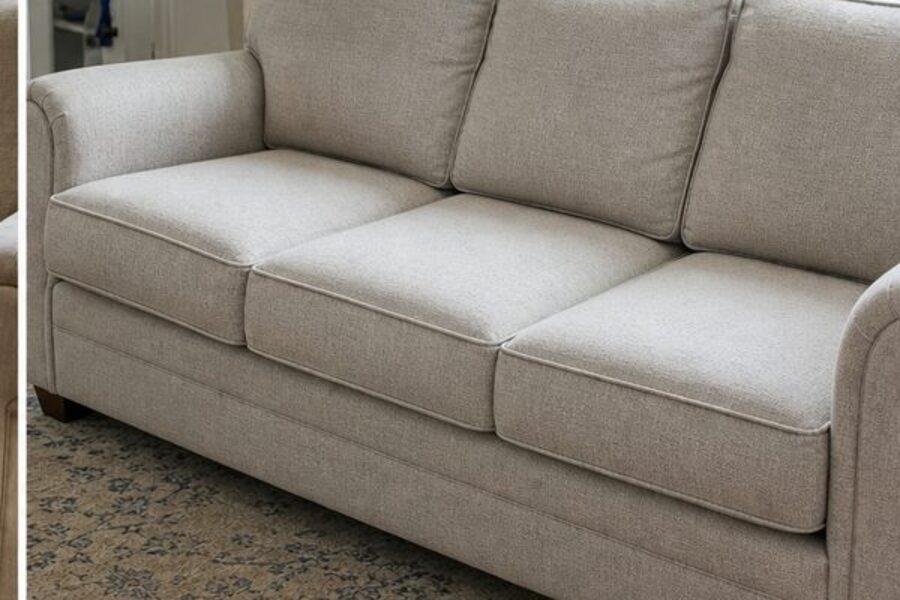
Why Your Frame Is Worth Saving
If your couch, loveseat, or armchair was built even twenty or thirty years ago, there is a good chance it has a kiln-dried hardwood frame underneath that sagging fabric and compressed foam. That frame is worth saving. It was built with mortise-and-tenon joints, corner blocks, and real craftsmanship that simply does not exist at retail price points anymore. The padding wore out. The springs might need retying. The fabric got stained or torn. But the bones of the piece are solid, and those bones are what cost real money to produce.
Total Control Over the Result
Reupholstering lets you keep the frame, the proportions, and the comfort profile you already know while getting brand-new padding, fabric, and structural reinforcement. You choose the exact material you want from our library of over 1,000 fabrics. You control the firmness of the foam, the style of the welting, and every other detail. The finished product is not some compromise off a showroom floor. It is a piece built specifically for your home, your taste, and the way your family actually lives.
The Environmental Advantage
There is also the environmental angle. Sending a perfectly good sofa to the landfill because the fabric wore out is wasteful by any measure. The foam, the wood, the springs, the webbing: all of it ends up in a dump when most of it could have been reused or rebuilt. Reupholstering keeps that material out of the waste stream and gives your furniture another decade or two of useful life. In a place like Monmouth County where people care about their homes and their community, that matters.
Faster and More Predictable Than Buying New
And then there is the practical side. A new sofa takes six to sixteen weeks to deliver these days, and you have no idea what you are actually getting until it shows up at your door. With reupholstery, you see and feel the fabric samples in person, you know exactly how the piece will look because you already own the frame, and the turnaround is typically faster than ordering something new. You also avoid the headache of trying to fit a new piece through your front door or around that tight corner in the hallway because the furniture is already in your home.
Every Type of Furniture, One Studio
At Coastal Craft Upholstery, we work on every type of residential and commercial furniture that comes through our studio here in Monmouth County. Sofas, sectionals, loveseats, dining chair sets, armchairs, wingback chairs, ottomans, benches, bar stools, headboards, and more. If it has fabric, foam, or springs, we can rebuild it. Bring it in, send us photos, or schedule a pickup and we will give you an honest assessment on the spot.
Sofa and Sectional Reupholstery
Your sofa is the centerpiece of your living room. It is where your family watches movies on Friday nights, where the kids build blanket forts on rainy Saturdays, and where you finally collapse after a long day at work. That kind of daily use takes a toll on any piece of furniture, no matter how well it was built. The cushions flatten, the arms show wear, stains build up in the creases, and eventually the whole couch just looks tired.
Get a Free Sofa QuoteFull Sofa Reupholstery
A full sofa reupholstery starts with stripping every piece of fabric off the frame. We remove the old covering, pull out the worn foam and dacron, and inspect every joint, spring, and piece of webbing underneath. If the frame needs reinforcement (and it often does after a decade or more of use), we handle that before any new material goes on. Loose joints get re-glued, cracked rails get reinforced, and we replace any broken or sagging webbing. Then we rebuild the padding from scratch with new high-density foam cut to the correct dimensions and wrapped in fresh dacron for that smooth, rounded shape. Your chosen fabric gets precision-cut, sewn in our studio, and installed by hand.
Sectional Sofa Reupholstery
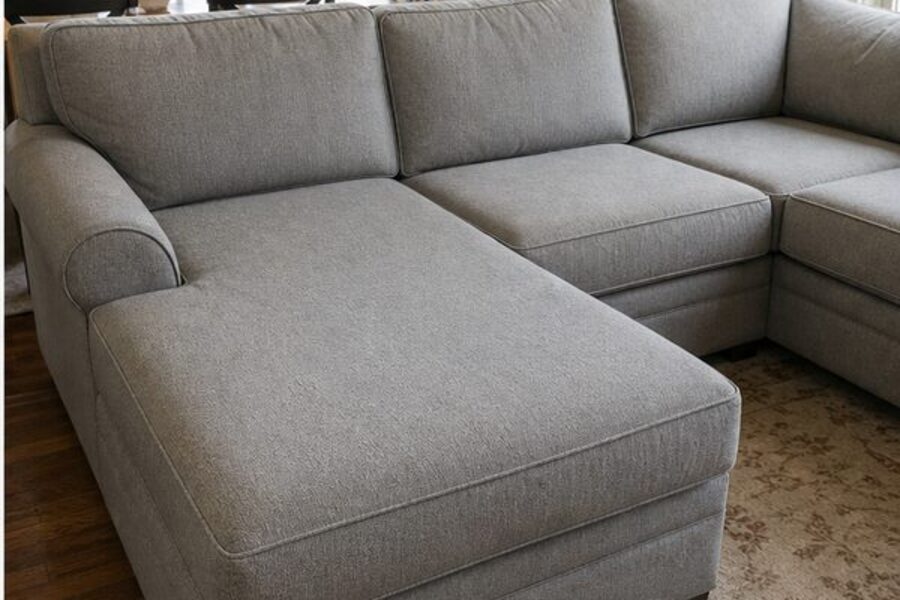
Sectionals add complexity because of their size and the way the pieces fit together. Each section has to match the others perfectly in terms of fabric tension, cushion firmness, and overall appearance. The seams where sections meet need to align cleanly. If your sectional has a chaise, a corner piece, and multiple straight sections, each one gets measured and templated individually. We work on sectionals of every configuration: L-shapes, U-shapes, curved sectionals, modular pieces with adjustable components, and oversized theater-style sectionals. We have handled sectionals as large as 14 feet across and delivered results that looked better than the day the piece left the factory.
Loose-Back vs. Tight-Back Sofas
The style of your sofa back affects how the reupholstery is approached. Loose-back sofas have removable back cushions that sit against the frame. These are relatively straightforward because the cushion covers can be made separately and the frame covering is simpler. Tight-back sofas have the padding built directly into the frame with no removable cushions. These require more precise fitting because the fabric has to wrap smoothly over the integrated padding without bunching, sagging, or pulling. We handle both styles every week in our studio, and we will walk you through the differences during your consultation so you know exactly what to expect.
Timeline and Delivery
Most sofa reupholstery projects take two to four weeks depending on the size of the piece, the fabric you choose, and whether structural repairs are needed. We coordinate pickup and delivery throughout Monmouth County so you are not without your couch any longer than necessary.
Dining Chairs That Match Your Table Again
Dining chairs get pulled out, sat in, scooted back, and bumped into the table two or three times a day, every single day. Multiply that by four or six or eight chairs and years of family dinners, homework sessions, holiday gatherings, and game nights, and you can see why dining chair upholstery wears out faster than almost anything else in the house. The seats compress until they feel like plywood. The fabric picks up stains that no amount of scrubbing will remove. The edges fray where the material wraps around the seat frame. But the chairs themselves (the hardwood frames, the turned legs, the proportions that fit your table perfectly) are usually in great shape.
Get a Dining Chair Quote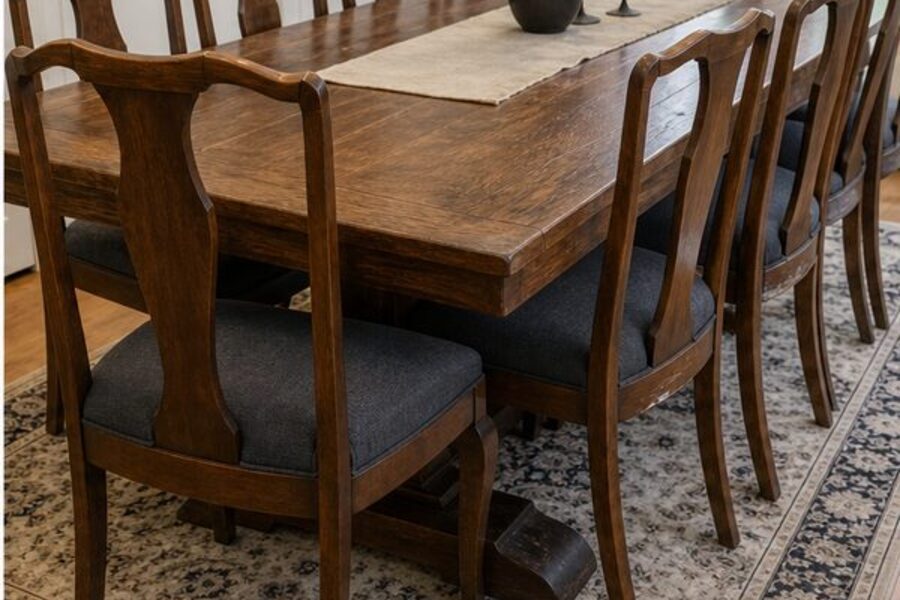
Slip Seats and Drop-In Cushions
The simplest and most affordable dining chair reupholstery involves slip seats, those removable cushions that sit in the chair frame and are held in place with screws from underneath. We pop the seat out, strip the old fabric, replace the foam, wrap the cushion in your chosen material, and reinstall it. The whole process takes very little time per chair, which is why slip seat projects are our most budget-friendly option. If you have a set of six or eight chairs with slip seats that need new fabric, you can transform the entire dining room for a fraction of what replacement chairs would cost.
Fully Upholstered Dining Chairs
Chairs where the fabric wraps around the entire back and seat require more involved work. We strip the old covering from every surface, rebuild the padding on both the seat and the backrest, and sew new covers that fit each contour precisely. Chairs with decorative welting, nailhead trim, or contrast piping along the edges take additional time but the finished result is worth every bit of that effort. A fully upholstered dining chair in a sharp performance fabric with clean welting and tight seams looks like something out of a design magazine, and it will hold up to daily family meals for years.
Host Chairs and Mixed Sets
Many dining sets include host chairs at the head and foot of the table that are styled differently from the side chairs. Some homeowners want everything in the same fabric for a uniform look. Others like the host chairs in a complementary or contrasting material that gives the table a more designed, intentional feel. We bring fabric samples to your home so you can hold them up against your table finish and see how the colors and textures work in your actual lighting. That is the kind of detail that separates custom reupholstery from buying whatever happens to be on sale at a chain store.
Set Pricing and Commercial Orders
We offer set pricing for dining chairs: the per-chair cost drops when you bring in four or more at once because we can batch the cutting, sewing, and assembly. For restaurants, hotels, and conference rooms, we handle bulk orders of 20, 50, or more chairs with commercial-grade materials and coordinated scheduling.
Armchairs Built for Another Lifetime
Armchairs and accent chairs are the personality pieces in any room. They anchor a reading nook, fill an empty corner, give guests somewhere comfortable to sit, and often serve as the visual focal point of the space. When the fabric on an armchair starts to show its age, the whole room feels off. Replacing that chair with something from a showroom means compromising on size, comfort, or style because the odds of finding an exact match for what you had are basically zero. Reupholstering brings it back to life exactly the way you want it.
Get an Armchair QuoteClub Chairs and Tub Chairs
Club chairs are those deep, wide, fully upholstered pieces that practically swallow you when you sit down. The arms are thick, the seat is generous, and the whole thing is designed for serious comfort. Over time, the leather or fabric on a club chair tends to crack or wear at the arm caps, the front seat edge, and the headrest area where contact is heaviest. We rebuild the padding in those high-wear zones, replace the covering, and can adjust the seat firmness to match how you actually use the chair. Tub chairs follow a similar profile but with a rounded barrel shape that wraps around you. Both styles are excellent candidates for reupholstery because the frames are typically built from solid hardwood with heavy-duty construction.
Bergere and Slipper Chairs
Bergere chairs have that classic French silhouette with an exposed wood frame surrounding the upholstered seat and back. The padding needs to sit tight and clean against the frame edges, which takes precise cutting and fitting. Any sloppiness in the upholstery shows immediately because the wood frame creates a visible boundary. We take extra time on bergere chairs to make sure the fabric tension is right and the padding profile sits exactly where it should. Slipper chairs are armless pieces that work well in bedrooms, dressing areas, and as occasional seating in living rooms. Their smaller scale makes them perfect for a bold fabric choice since you are not committing a huge amount of material to the project.
Mid-Century and Modern Armchairs
Mid-century modern chairs have seen a massive resurgence along the Jersey Shore and throughout Monmouth County. Pieces by manufacturers like Knoll, Herman Miller, and Thayer Coggin are showing up at estate sales, vintage shops, and in basements where they have been sitting for decades. These chairs were built beautifully but the original upholstery is often shot. We handle mid-century pieces regularly and understand the specific foam profiles, button placements, and fabric tensions that these designs require. If you have a vintage armchair that deserves better than a dusty corner, bring it in and we will show you what it can look like with fresh materials.
Ottomans and Benches Reimagined
Ottomans and benches play supporting roles in a well-designed room, but they get noticed more than you might think. A worn ottoman sitting next to a freshly reupholstered chair sticks out. A dated bench at the foot of the bed makes the whole bedroom feel neglected. These are the pieces that tie a room together, and when they are off, everything else looks less polished too.
Get an Ottoman or Bench Quote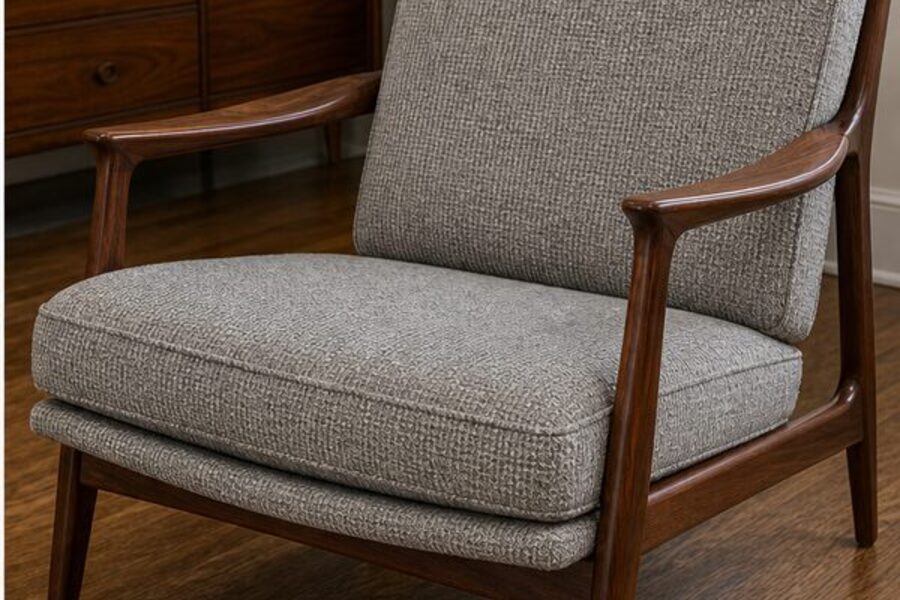
Matching Ottomans to Existing Pieces
One of the most common requests we handle is reupholstering an ottoman to match a chair or sofa that was already done. Maybe you had your favorite club chair recovered last spring and now the matching ottoman looks out of place. Or you bought a new sofa and the old ottoman clashes with the updated color scheme. We keep detailed records of every fabric we use on every project. If you come back six months or a year later for a companion piece, we can usually pull the exact same material. If the fabric has been discontinued, we will find the closest match available or suggest a complementary option that works with what you already have.
Storage Ottomans
Storage ottomans with hinged or removable lids add functionality to the equation. The lid needs to open and close smoothly after the new fabric goes on, the hinge area has to be reinforced so it does not tear under repeated use, and the interior should stay clean and accessible. We pad the lid for comfortable sitting, reinforce the hinge attachment points, and line the interior when needed. These pieces are popular in living rooms and bedrooms where you want a place to stash blankets, remotes, toys, or extra pillows without adding visual clutter to the room.
Entryway, Dining, and Bedroom Benches
Benches in the entryway take abuse from shoes, bags, jackets, and wet umbrellas. Dining benches handle food spills, fidgeting kids, and the constant slide of people scooting in and out. Bedroom benches at the foot of the bed see clothes tossed on them, pets jumping up and down, and the general wear of daily life. All three need performance fabrics that clean easily and hold up to heavy use. We default to stain-resistant performance materials for most bench projects because benches live in high-traffic zones where appearances matter and messes happen. The result is a piece that stays looking sharp for years with minimal maintenance.
Bar Stools That Hold Up to Real Life
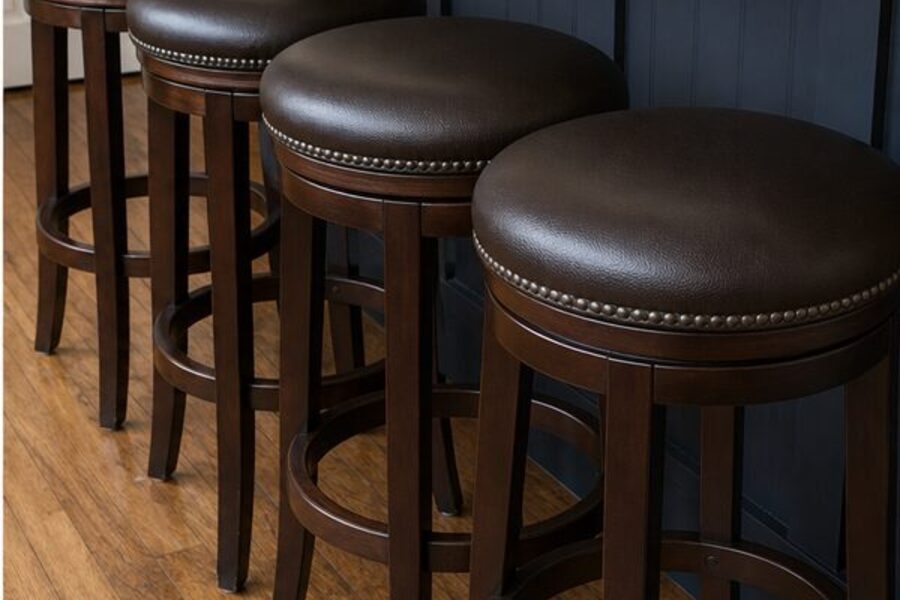
Bar stools sit at counter height where everyone sees them, and they absorb more punishment than most people realize. Between the climbing on and off, the spills, the scuffing from shoes on the footrests, and the constant weight-bearing, bar stool upholstery wears out faster than almost any other seat in the house. When those vinyl seat covers start cracking or the fabric goes threadbare, the whole kitchen island or bar area looks run-down.
Get a Bar Stool QuoteCounter Height vs. Bar Height
Counter-height stools sit around 24 inches and pair with standard kitchen counters and islands. Bar-height stools run about 30 inches for actual bar tops and taller surfaces. The height difference changes the proportions of the seat and how the fabric wraps, so we measure each stool individually and rebuild the padding to match the geometry. We also pay attention to where the footrest sits relative to the seat because wear patterns differ between the two heights based on how people position their feet.
Swivel and Fixed-Base Styles
Swivel stools need the upholstery to accommodate the rotation mechanism without catching, bunching, or wearing at the pivot point. We have recovered hundreds of swivel stools and know exactly how to manage the fabric around the base hardware so everything spins freely. Fixed-base stools are simpler but still need careful attention at the mounting points. For both types, we use fabrics rated for the kind of daily contact that bar seating gets: performance textiles, commercial-grade vinyl, and marine-grade faux leather are all popular choices.
Restaurant and Commercial Bar Stools
If you run a restaurant, brewery, wine bar, or cafe anywhere in Monmouth County, your bar stools are one of the first things customers notice. Cracked seats and peeling vinyl send the wrong message. Reupholstering commercial stools in heavy-duty material costs a fraction of buying replacements, and it lets you update the look of your space without shutting down or ordering furniture that takes months to arrive. We offer bulk pricing for commercial jobs and can work around your business hours to keep disruption to a minimum.
The Classic Wingback, Restored
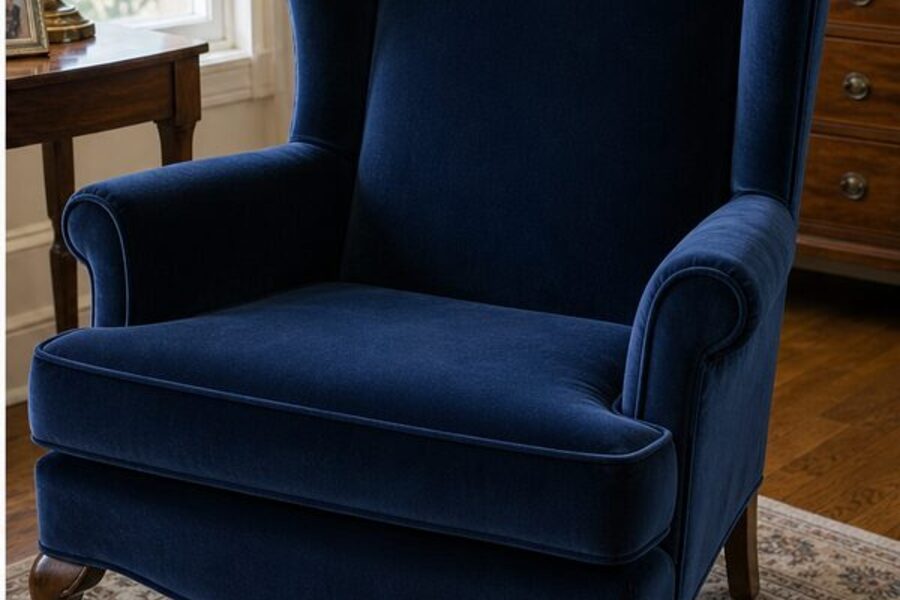
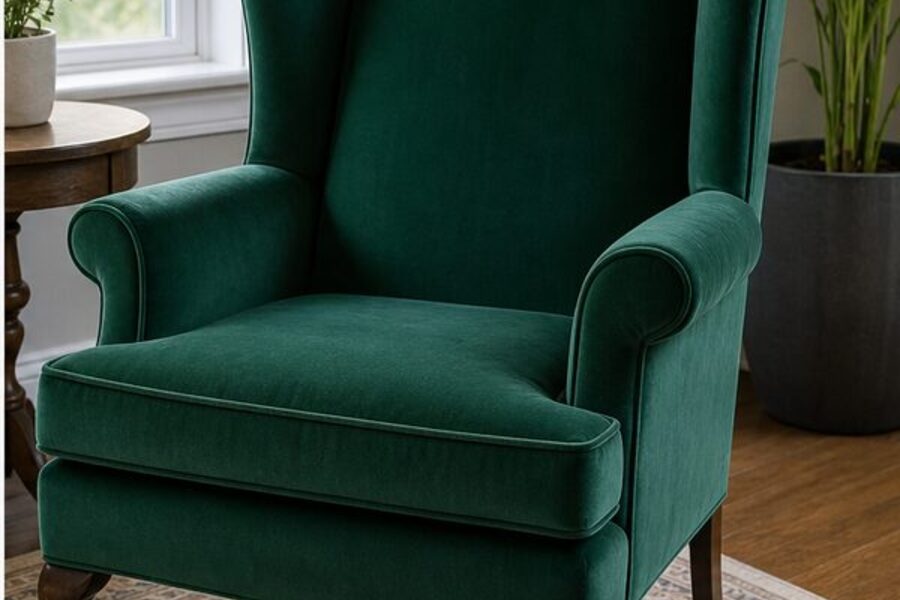
Wingback chairs have been a fixture in well-furnished homes for centuries. The high back, the distinctive side wings, and that unmistakable stately profile make a wingback one of the most recognizable pieces in furniture design. They look right at home flanking a fireplace, anchoring a reading corner, standing in a bedroom, or serving as the statement piece in an entryway. When the upholstery on a wingback starts showing age, the chair goes from elegant to tired in a hurry, but the frame underneath is usually built to last another hundred years.
Get a Wingback Chair QuoteButton Tufting and Channel Back Options
Many wingback chairs feature button tufting on the inside back, and getting this right is one of the details that separates professional upholstery from DIY attempts. Each button has to be placed at a precise depth with consistent spacing. The padding underneath needs to support the tufting pattern without creating hard spots or uneven compression. We offer diamond tufting, biscuit tufting, and channel tufting depending on the style you want. If your original wingback was tufted and you want a clean, smooth back instead, we can make that change. If it was smooth and you want to add tufting for a more formal look, we handle that too.
Fabric and Scale
Wingback chairs have large, curved surfaces that showcase fabric beautifully. The back panel is a dramatic canvas for pattern, color, and texture. A neutral linen gives the chair a relaxed, coastal feel that works perfectly in Monmouth County homes near the shore. A deep jewel-toned velvet turns it into a showpiece. A bold geometric or large-scale floral creates a statement that anchors the room. We walk you through how different fabrics drape across the curved back, how pattern repeats fall across the wings, and how texture catches light at different angles. This is the kind of consultation that makes custom work worth every dollar.
Yardage and Estimating
Wingback chairs typically require five to seven yards of fabric because of the large surface area and the wings that need extra material for proper fitting and pattern matching. We calculate exact yardage during the estimate so there are no surprises.
Custom Slipcovers for Every Piece
Sometimes full reupholstery is not what you need. Maybe your furniture is in decent shape underneath and you just want a new look for the season. Maybe you have pets or small children and you want a protective layer you can throw in the wash. Or maybe you love the idea of switching between a light linen slipcover for summer and a heavier textured cover for winter. Custom slipcovers give you that flexibility without permanently altering your furniture.
Discuss Slipcover Options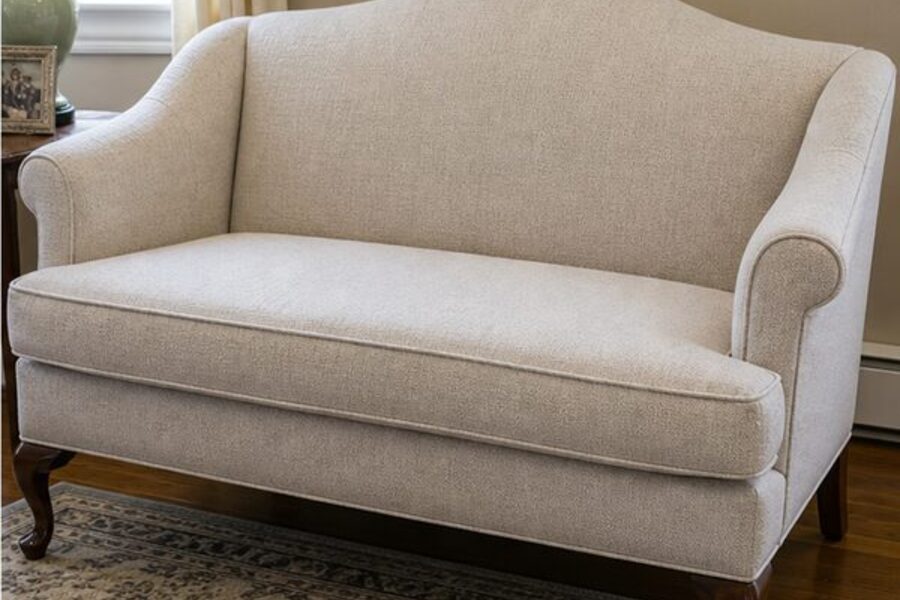
The Difference Between Custom and Store-Bought
Store-bought slipcovers are made to fit generic furniture shapes, and they show it. They bunch at the corners, sag at the arms, and slide around every time someone sits down. A custom slipcover is templated directly on your specific piece of furniture. We measure every contour, every arm width, every cushion dimension, and sew the cover to fit like a glove. When it is on the sofa, it looks like proper upholstery, not a bedsheet draped over the couch. The difference is obvious from across the room.
Washable and Performance Fabrics
One of the biggest advantages of a slipcover is the ability to remove it and wash it. We use fabrics that are machine-washable and pre-shrunk so the cover goes back on the same way it came off. For homes with dogs, cats, or young kids, a washable slipcover in a durable cotton or linen blend is the most practical way to protect good furniture while still having a living room that looks put-together. We also offer slipcovers in performance fabrics like Crypton that resist staining even before you wash them.
Seasonal and Occasional Slipcovers
Some of our clients order two sets of slipcovers for the same piece: a lighter color and weight for spring and summer, and a darker, heavier fabric for fall and winter. Swapping them out takes five minutes and completely changes the feel of the room. Other clients use slipcovers on furniture that only gets heavy use during certain times of the year, like a beach house that sits empty during the off-season. Either way, a well-made custom slipcover protects your investment and gives you options that permanent upholstery cannot match.
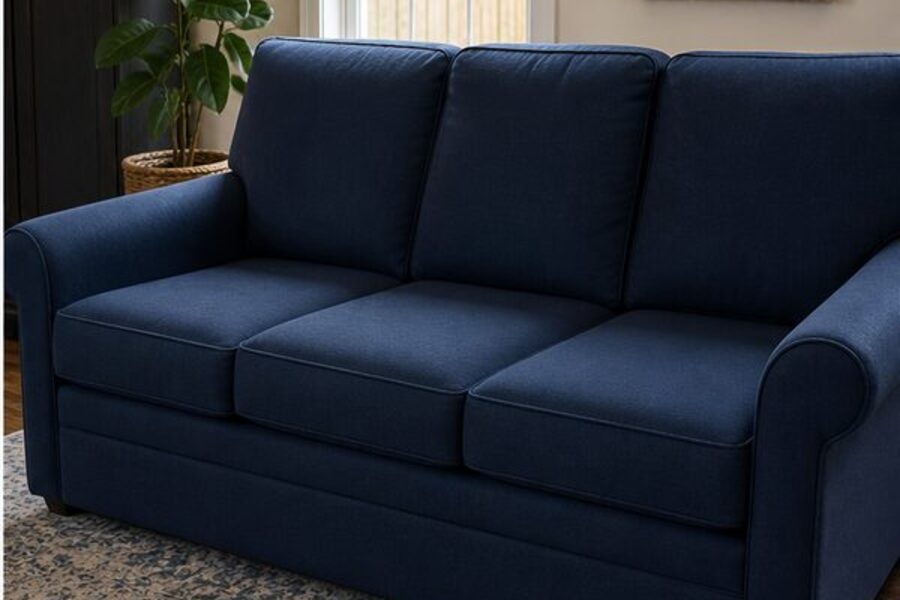
New Cushions That Feel Better Than Day One
Sometimes the fabric on your sofa or chair still looks fine, but the cushions have gone flat. You sink into the seat and struggle to get back out. The back cushions have lost their shape and lean to one side. The foam inside has compressed to half its original thickness and no amount of fluffing brings it back. This is one of the most common furniture complaints we hear from homeowners across Monmouth County, and the fix is simpler and more affordable than most people expect.
Get a Cushion Replacement QuoteFoam Types and Densities
Not all foam is created equal. The foam that came in your sofa from the factory was probably a standard 1.8-pound density that was adequate when new but breaks down relatively quickly under daily use. We use high-density foam starting at 2.0 pounds and going up to 2.8 pounds for seats that need serious support. Higher density means the foam holds its shape longer, supports more weight without bottoming out, and resists the body impressions that make cheap cushions look worn after a year. We also offer different firmness levels within each density range so you can choose whether you want a firm, supportive seat or something softer that you sink into.
Down and Fiber Wraps
For clients who want that soft, luxurious feel without sacrificing support, we offer foam cores wrapped in dacron fiber or a down-and-feather blend. The foam core provides the structural support that keeps the cushion from bottoming out, while the outer wrap gives it that plush, inviting surface feel. Down-wrapped cushions have a more relaxed, lived-in look that works beautifully in casual coastal homes. Dacron-wrapped cushions give a smoother, more tailored profile that suits modern and transitional styles. We show you samples of both so you can feel the difference before committing.
Cushion Covers and Inserts
If your cushion covers are still in good condition but the inserts are shot, we can replace just the foam inserts without touching the fabric. We measure the existing covers, cut new foam to the precise dimensions, wrap it, and insert it into your existing covers. This is the fastest and most cost-effective way to restore the comfort of your sofa or chairs without a full reupholstery project. If the covers are showing some wear too, we can sew new ones at the same time using fabric that matches or complements your existing furniture.
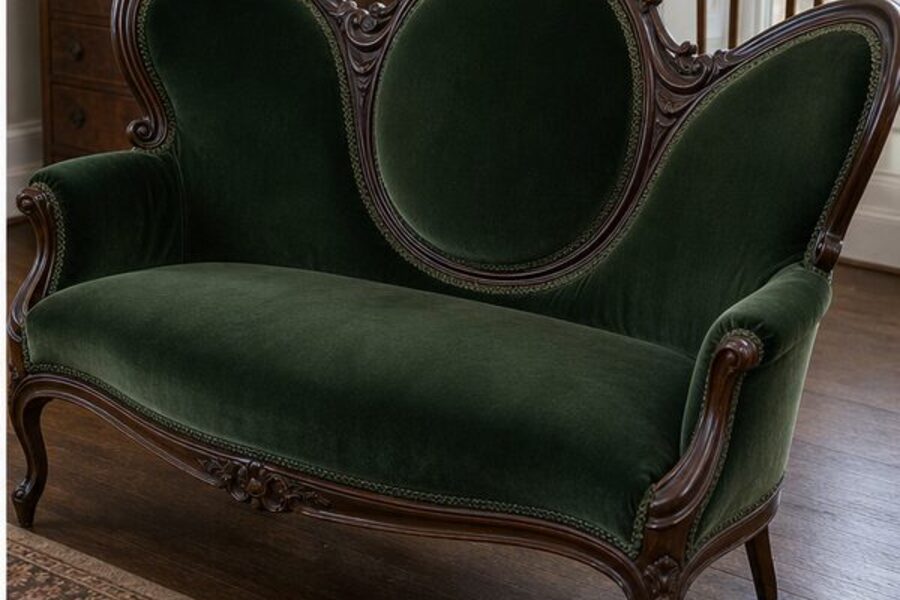
What Happens Under the Fabric
The best upholstery in the world will not hold up if the structure underneath is compromised. Before we put any new material on your furniture, we strip it down and inspect every component: the frame, the joints, the springs, and the webbing. This inspection is included in every reupholstery project we do, and it is what separates a professional shop from someone who just staples new fabric over old problems.
Request a Repair EstimateFrame Repair and Reinforcement
Furniture frames are built from hardwood, softwood, plywood, or combinations of all three. Hardwood frames made from kiln-dried ash, maple, birch, or oak are the gold standard and can genuinely last a hundred years with proper maintenance. Softwood and plywood frames are lighter and cheaper but more prone to cracking and splitting at stress points. We assess the frame material and condition as part of every project. Loose joints get disassembled, cleaned of old adhesive, and re-glued with modern wood adhesives that create bonds stronger than the wood itself. Cracked rails and legs get reinforced with sister boards, corner blocks, or full replacement pieces milled to match the original. We never cover up a structural problem with fabric. That is a recipe for the same issue coming back in six months.
Coil Spring and Sinuous Spring Systems
Coil springs are the traditional suspension system found in quality sofas and large chairs. They sit in rows on the seat platform and are tied together in an eight-way pattern using Italian spring twine. When springs break, lose tension, or shift out of alignment, the seat sags and develops uncomfortable dips and hard spots. We replace broken coil springs, re-tie the entire spring system when needed, and make sure the tension is consistent across the full seating area. Sinuous springs (those S-shaped zigzag wires) are found in more modern furniture and lighter-weight pieces. When they break or pop loose from their clips, we replace them with properly gauged wire and new mounting hardware.
Webbing Replacement
Jute webbing is the traditional foundation layer that sits underneath the springs or directly under the foam. Over decades, jute stretches, weakens, and eventually tears. When the webbing goes, the seat sags even if the springs above are perfectly fine. We strip the old webbing and replace it with new high-quality jute or synthetic elasticized webbing that provides a firm, consistent platform. For furniture with rubber or Pirelli-style elastic straps, we replace those with the correct gauge and stretch coefficient to restore the original support profile.
Choosing the Right Fabric for Your Furniture
Fabric selection might be the single most important decision in any reupholstery project. The fabric you choose determines how the piece looks, how it feels to sit on, how long the upholstery lasts before showing wear, and how easy it is to clean when life happens. We carry samples from hundreds of mills and can source virtually any fabric available in the market, but here is what we recommend based on years of experience working with homeowners and businesses across Monmouth County.
Discuss Fabric Options With Us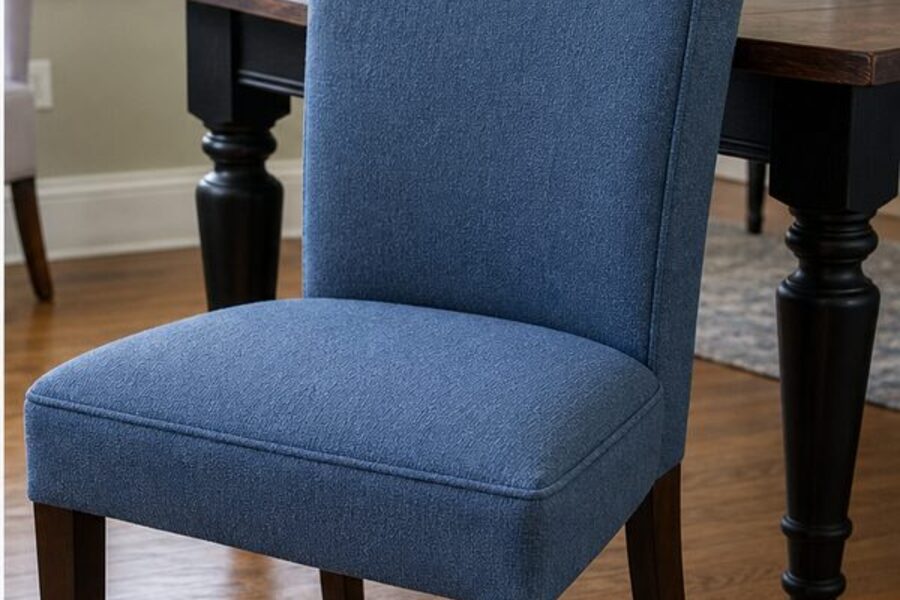
Performance Fabrics: Crypton, Sunbrella, and Revolution
Performance fabrics have changed the upholstery industry completely over the last decade. These are engineered textiles that resist staining, clean with soap and water, and hold up to heavy daily use without pilling, fading, or wearing through. Crypton is probably the best-known name in performance upholstery. It uses a proprietary treatment that creates a moisture barrier within the fiber itself, not just a topical coating that wears off. Spills bead up on the surface and wipe away with a damp cloth. Red wine, coffee, pet accidents, marker. Crypton handles all of it without staining. It also resists odor, which is a real advantage in homes with pets.
Sunbrella is traditionally known as an outdoor fabric, but their indoor line has gotten incredibly sophisticated. Sunbrella Indoor fabrics are solution-dyed, which means the color goes all the way through the fiber rather than sitting on the surface. This makes them essentially fade-proof, even in rooms with direct sun exposure. For homes along the Jersey Shore where sunlight pours through windows most of the day, Sunbrella indoor fabric on your sofa or chairs will look the same five years from now as it does the day we install it. The bleach-cleanable feature is a real bonus for families: you can literally spray the fabric with a diluted bleach solution to remove tough stains without affecting the color.
Revolution Performance is a newer option that has been gaining ground quickly. It is made from recycled fibers, which appeals to environmentally-conscious homeowners, and it cleans with just water, no soap needed. The texture and hand-feel of Revolution fabrics are hard to distinguish from traditional wovens, which is impressive given how durable they are. We use Revolution on a lot of family room sofas and dining chairs where durability and easy cleaning are top priorities.
Natural Fabrics: Linen, Cotton, and Wool
Natural fibers have a warmth, texture, and visual depth that synthetics still struggle to replicate. Linen drapes beautifully and has a casual elegance that fits the Monmouth County coastal aesthetic perfectly. It wrinkles (that is part of its charm) and it softens with age. Cotton is versatile, affordable, and available in virtually every color and pattern imaginable. It takes dye well, which means the color options are nearly unlimited. Wool is surprisingly durable as an upholstery fabric and has natural resistance to wrinkling, soiling, and even fire. The tradeoff with natural fabrics is that they generally require more careful maintenance than performance fabrics. Linen stains more easily. Cotton can fade in direct sunlight. Wool needs professional cleaning for serious spills. For low-traffic accent pieces or formal living rooms that do not see daily family use, natural fabrics are a beautiful choice. For the family room sofa that gets hammered every day, performance fabric is the smarter bet.
Leather and Faux Leather
Full-grain leather develops a patina over time that gets better with age. It is the most durable option and the most expensive. Top-grain leather has a more uniform appearance and is easier to maintain. Both are excellent choices for sofas, club chairs, office seating, and dining chairs where you want a classic, sophisticated look. We source leather from reputable tanneries and can show you samples across a range of colors, finishes, and price points. For clients who want the look of leather without the price tag or the maintenance requirements, high-quality faux leather has come a very long way. Modern faux leather is soft, breathable, and virtually indistinguishable from the real thing at normal viewing distances. It cleans with a damp cloth, resists scratching better than many real leathers, and costs significantly less per yard.
Double-Rub Counts and What They Mean
When we talk about fabric durability, we use a measurement called the double-rub count. This number comes from a standardized test where a machine rubs the fabric back and forth under controlled pressure until the fabric shows visible wear. A fabric rated at 15,000 double rubs is adequate for light residential use on accent pieces. For daily-use furniture like sofas and dining chairs, you want at least 25,000 to 30,000 double rubs. Commercial applications like restaurant seating need 50,000 or more. Performance fabrics like Crypton and Sunbrella regularly hit 100,000-plus double rubs, which is part of why they hold up so well over time. We always recommend fabrics with appropriate durability ratings for how the piece will actually be used, not just how it needs to look.
Selecting Patterns, Textures, and Colors
Choosing a fabric is not just about durability. It has to look right in your space too. We bring samples to your home so you can see how colors look in your actual lighting, hold fabrics up against your walls and other furniture, and get a real sense of how the finished piece will fit into the room. Large-scale patterns need careful placement so the repeat centers correctly on each cushion and wraps naturally around arms and backs. Small-scale textures and solids are more forgiving but still benefit from thoughtful color coordination. We walk you through all of this during the consultation. We have seen thousands of fabric-and-furniture combinations and can steer you away from choices that do not hold up and toward ones that will look incredible for years.
How We Reupholster Your Furniture
Every project follows the same proven five-step process, whether it is a single dining chair or a full living room set.
Consultation
Bring your piece in, send us photos, or schedule a home visit. We assess the condition, discuss your vision, and show you fabric samples.
Strip & Inspect
We remove all old fabric, inspect the frame for loose joints or damage, and evaluate the springs, webbing, and padding underneath.
Repair & Rebuild
Loose joints are re-glued, broken springs replaced, and worn foam swapped for fresh, high-density padding. The foundation gets rebuilt properly.
Cut & Sew
Your chosen fabric is precision-cut, pattern-matched if needed, and sewn in our studio. Every seam, welt, and detail is done by hand.
Final Fitting
New upholstery is installed, every detail inspected, and we do a final quality check. Your furniture is ready for pickup or delivery.
Before & After Transformations
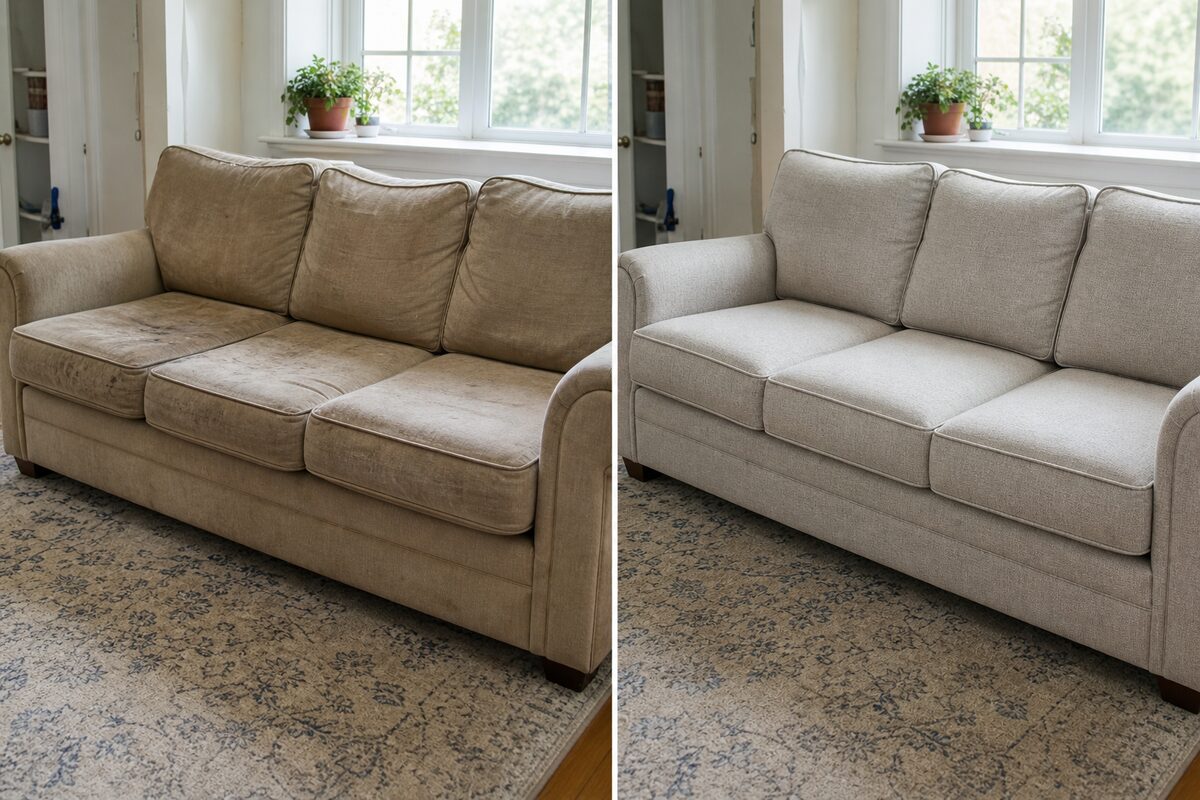
Real results from real projects in our Monmouth County studio. Every piece tells a story of careful restoration and expert craftsmanship.
 Before / After
Three-Seat Sofa
Faded cotton replaced with Sunbrella indoor performance fabric in oatmeal
 Before / After
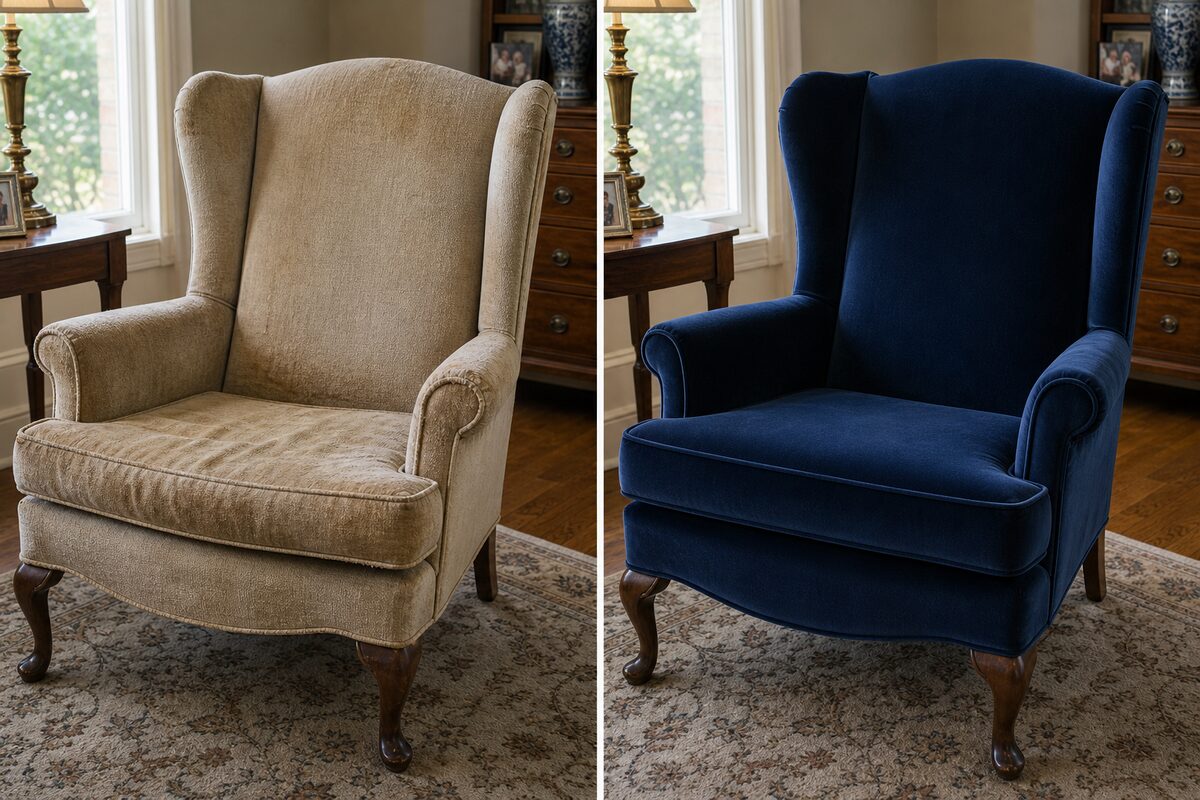
Vintage Wingback Chair
Full restoration with new springs, foam, and navy velvet upholstery
 Before / After
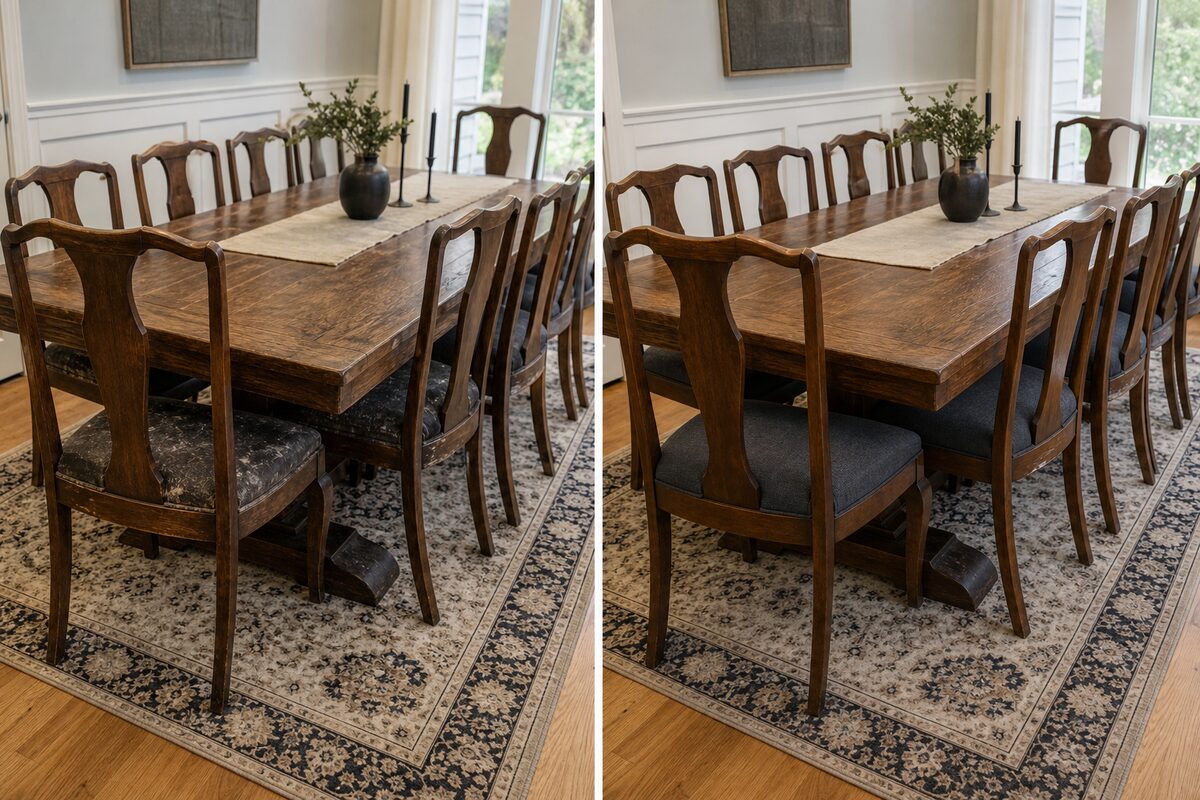
Dining Chair Set of 8
Worn velvet seats recovered in Crypton performance fabric in charcoal
What Affects the Cost
Every piece of furniture is different, and we provide honest, transparent estimates based on the actual scope of work involved. There are no hidden fees and no surprises: you know exactly what you are paying for before we start.
The good news is that reupholstering is almost always less expensive than buying a replacement of comparable quality. A sofa that would cost $3,000 to $6,000 to replace with something built as well as what you already own can typically be reupholstered for significantly less while keeping the exact dimensions, comfort, and character of the original piece.
We provide free, no-obligation estimates for every project. Bring your furniture to the studio, send us photos with measurements, or schedule a home visit and we will give you an accurate quote within 24 hours.
Get Your Free EstimateFurniture Type & Size
A dining chair slip seat costs less than a full sectional with loose cushions and skirt details
Material Selection
Performance fabric, designer prints, leather, and linen all vary in price per yard
Structural Repairs
Loose joints, broken springs, cracked frame rails, or torn webbing add to the total
Foam & Padding
High-density foam, down wraps, and dacron layers affect padding cost
Detail Work
Button tufting, nailhead trim, contrast welting, skirts, and piping add labor time
Quantity
Sets and bulk orders get per-piece discounts that lower the overall cost
Furniture Reupholstery FAQs
Answers to the questions we hear most from homeowners and businesses across Monmouth County.
Furniture Reupholstery Across Monmouth County
We provide furniture reupholstery services with pickup and delivery throughout all 53 municipalities in Monmouth County, NJ.
Your Furniture Deserves a Fresh Start
Whether it is a single armchair or an entire living room set, we are here to bring your furniture back to life. Free estimates, no pressure, honest advice.